
Meesho had earned a clear place in users' minds: affordable, accessible, and full of variety. But a lower price on a familiar brand could create suspicion instead of confidence.
Commerce / Trust / Brand experience
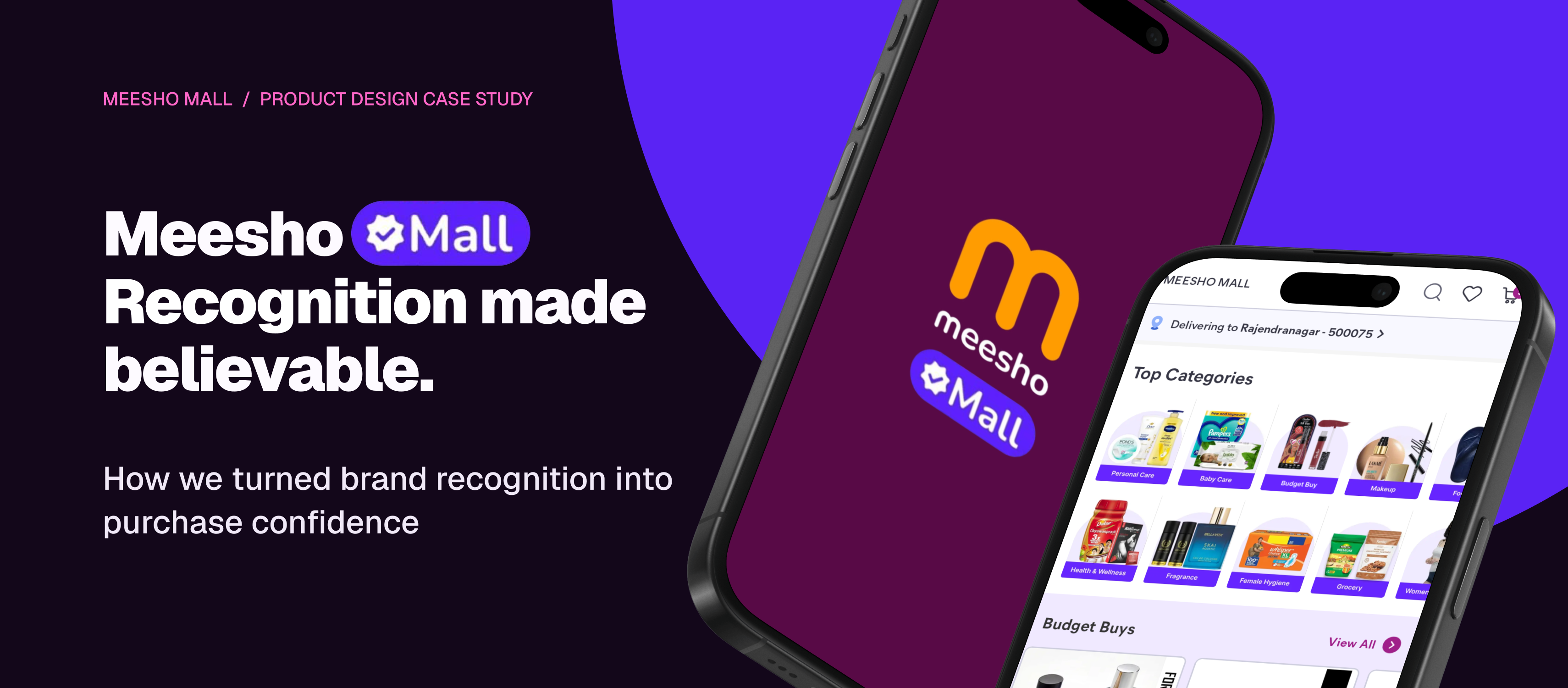
Meesho Mall
Turn brand recognition into purchase confidence.
- Product
- Meesho Mall brand storefront and discovery
- Role
- Product Designer
- Scope
- Storefront system, purchase confidence, failure states, measurement
The tension
Affordable was trusted. Branded was questioned.
Trust is not one screen. Each moment of doubt needs a specific piece of proof placed close to the decision it protects.
Success looked like
Success meant durable commerce: Mall's GMV contribution moved from 4% to 7%, a 75% relative increase, while quality metrics stayed part of the product definition.
The constraint
The system had to work across many brands and sellers, varying product quality and policies, and a journey where trust could break from discovery through refund recovery.
4%Mall share of GMV before
The starting contribution used to frame the opportunity.
7%Mall share of GMV after
The resulting Mall contribution shown in the case study.
+75%relative GMV growth
Relative growth in Mall's GMV contribution.
The product story
The interface, one decision at a time.
01 / Discovery
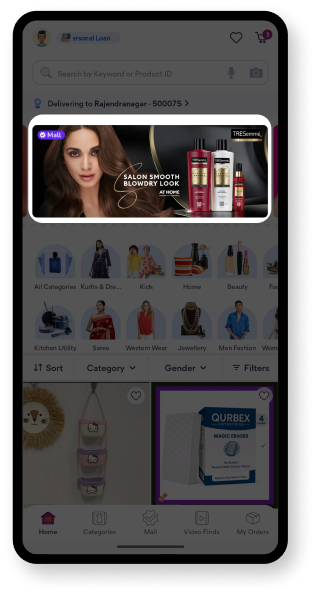
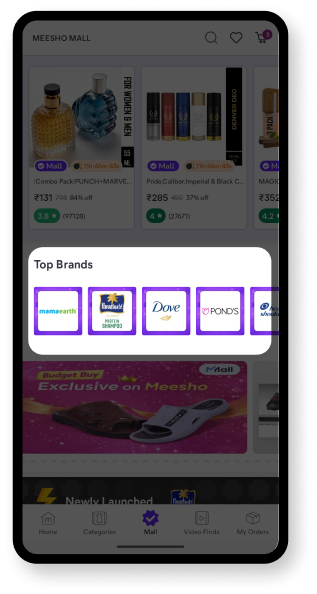
Recognition starts the journey. Proof keeps it moving.
Mall identity, brand-first shelves, and branded assortment make the promise visible from the first browse moment.
02 / Consideration
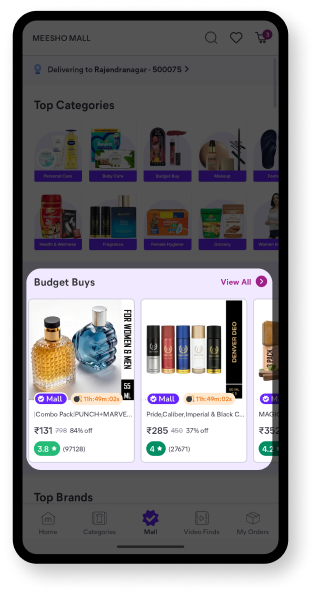
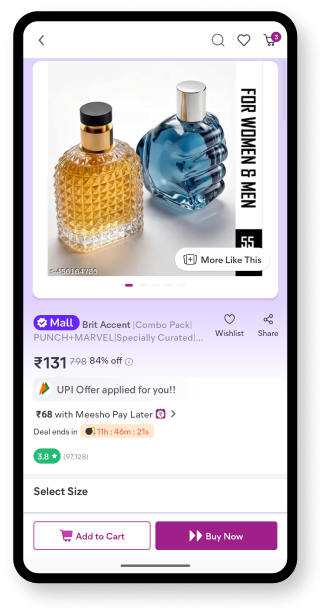
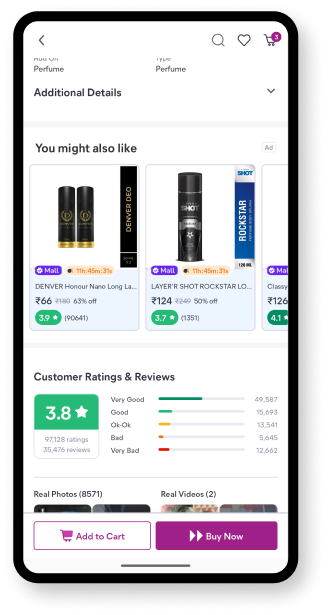
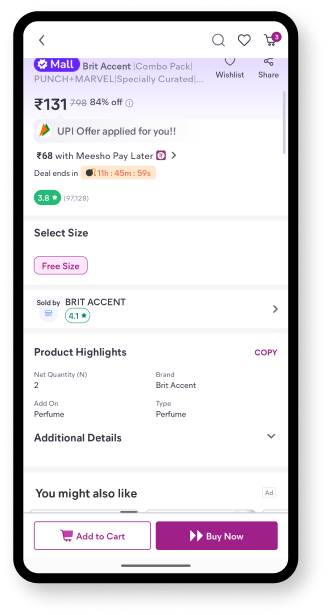
Value feels credible when evidence travels with it.
Choice, ratings, and offer clarity answer the questions that surface when a familiar brand is priced unexpectedly low.
03 / Brand destination
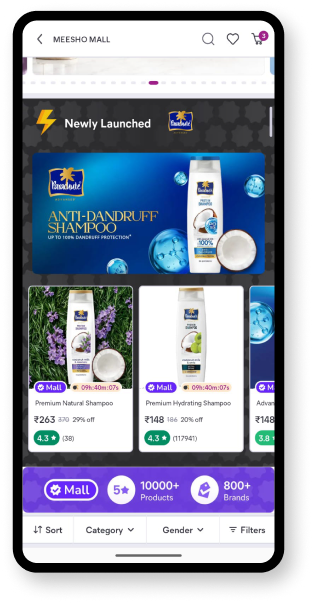
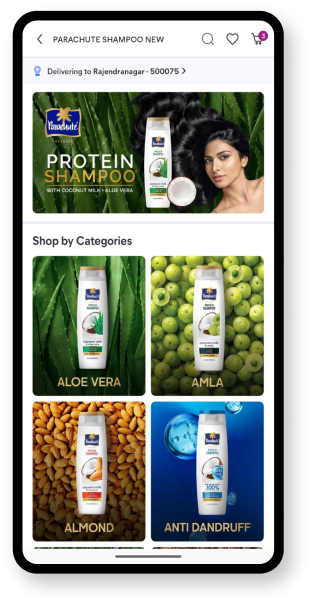
Let users move from a brand moment into a complete store.
Brand sections create focused discovery inside Mall, while brand stores give each identity a deeper, shoppable destination.
Move proof closerto the purchase decision.
A premium-looking page does not answer whether a product is genuine.
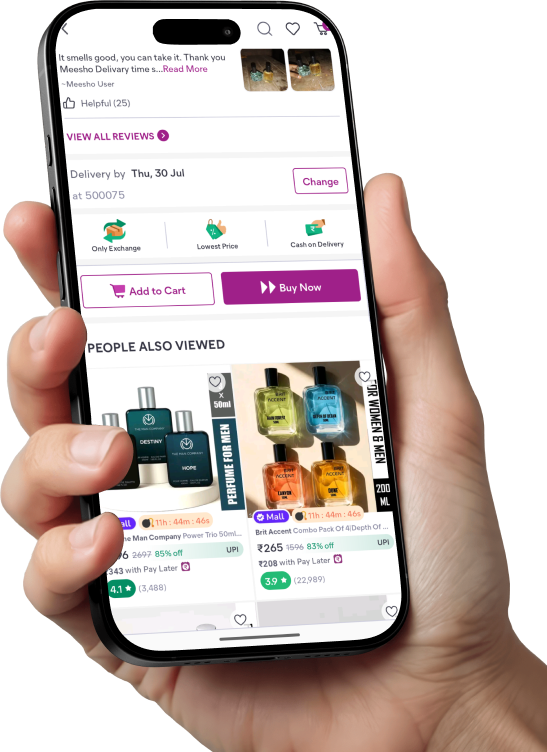
The hierarchy had to surface evidence before users reached the CTA.

Original BrandAuthorised Seller7-day returns
Product + brand
Recognition creates interest
Ratings + customer proof
Experience becomes credible
Price + offer
Value becomes legible
Delivery + returns
Risk feels bounded
Originality + seller
Proof resolves doubt
Purchase action
Confidence becomes conversion
The trust test
The happy path is only half the product.
Discovery loses the promise
Empty brand pages, failed loads, unavailable products, and location limits explain what changed and keep the next route visible.
Purchase proof becomes unclear
Incomplete information, changing seller verification, invalid offers, payment issues, and disappearing inventory surface specific status and ownership.
Recovery breaks confidence
Cancellation, delayed tracking, damaged products, authenticity concerns, rejected returns, and slow refunds need clear timing and responsibility.
The decisions
Three moves carried the story.
Sequence reassurance across the journey
Discovery establishes the Mall identity, consideration proves seller and product legitimacy, checkout bounds risk, and after-purchase recovery protects the promise.
Place evidence beside the decision
Originality, authorised seller, ratings, delivery, and returns were treated as purchase hierarchy, not supporting information hidden elsewhere.
Build a storefront system, not one-off pages
Reusable brand headers, category shelves, product grids, promotional collections, trust indicators, and brand stories let the experience scale beyond a few custom launches.
What I would test next