
Users were not rejecting every unknown call. They wanted Equal to understand the kinds of calls they were done with.
AI controls / Preference systems
AI Muting Promotional Calls
Users wanted fewer junk calls, not more settings.
- Product
- Equal Call Preference
- Role
- Product design lead
- Scope
- Call preference IA, category muting, confirmation loops, Mixpanel-backed results
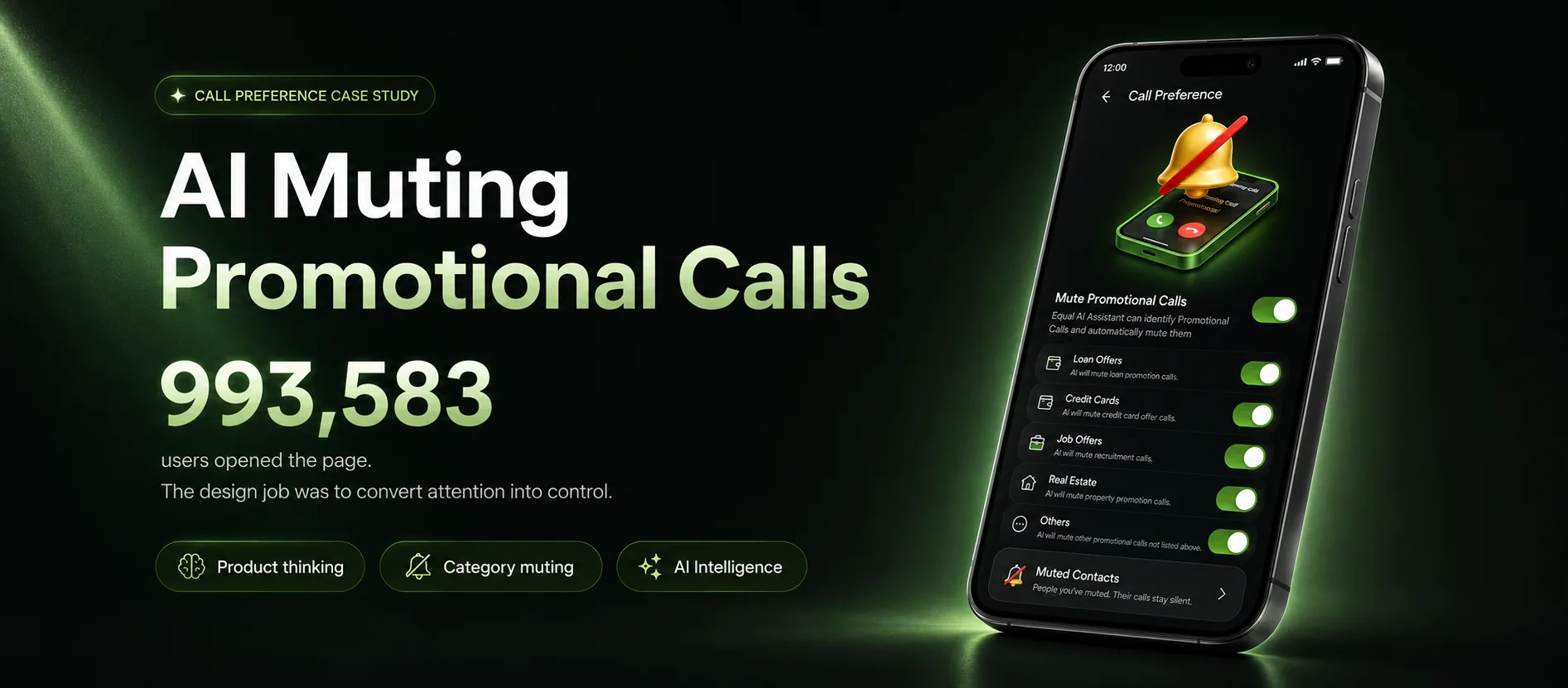
The tension
Users did not want to mute every unknown call. They wanted Equal to understand which kinds of calls they were done with.
Users were drawing boundaries by intent, so recognition had to come before configuration and every mute needed a visible way back.
Success looked like
Success meant high-reliability category muting, strong caller-mute usage, and clearer user control over promotional calls.
The constraint
AI classification had to be explainable enough to trust, and muting needed an obvious reversal path.
993kusers opened the page
Attention waiting to become control.
469kcaller mutes
36.8k credit-card calls muted inside the same control system.
99.2%category mute reliability
Reliability from the source case study.
The product story
The interface, one decision at a time.
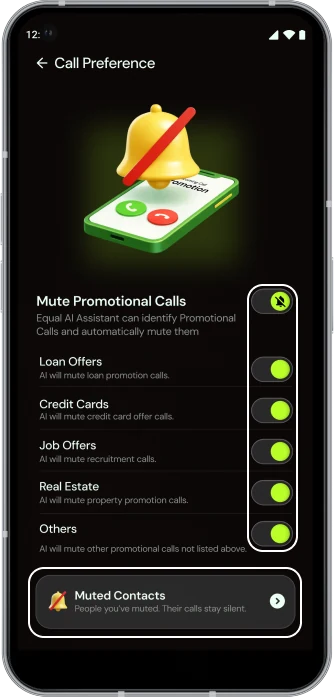
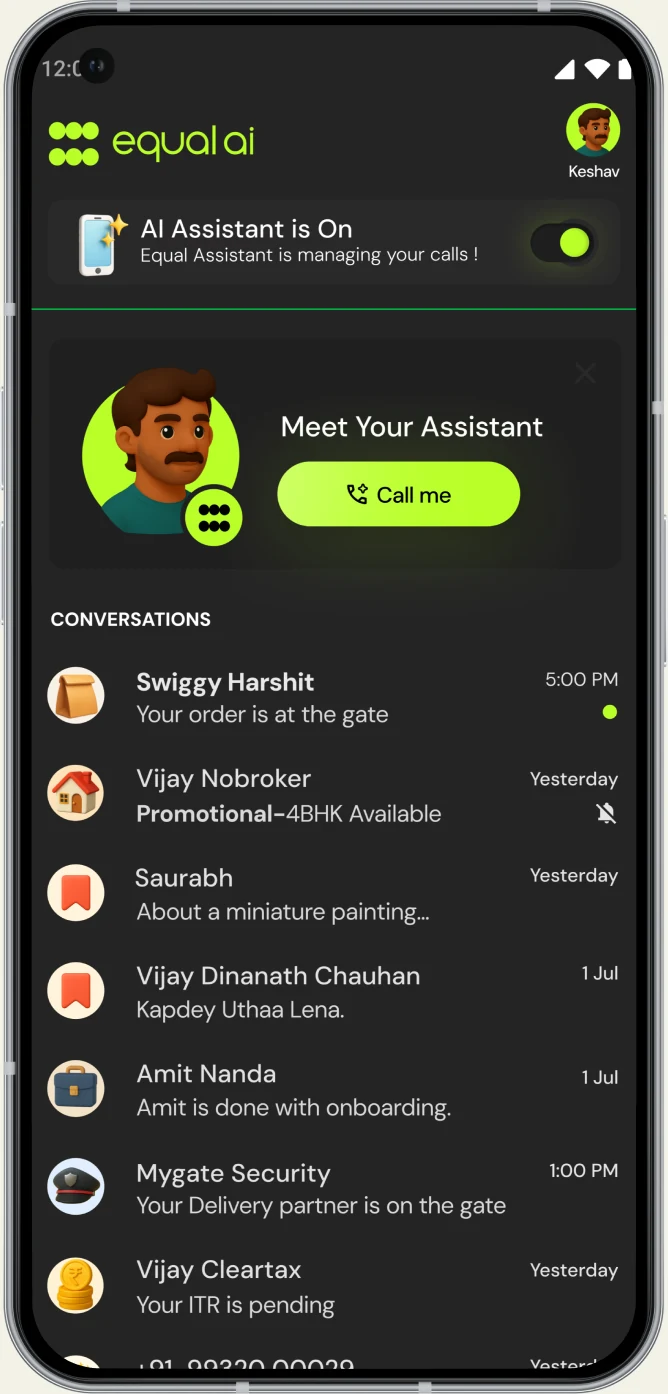
01 / Intent first
Start with the kind of interruption.
Promotional, credit-card, and loan calls are recognizable purposes. The system should speak that language first.
02 / Proof
A strong action needs a visible receipt.
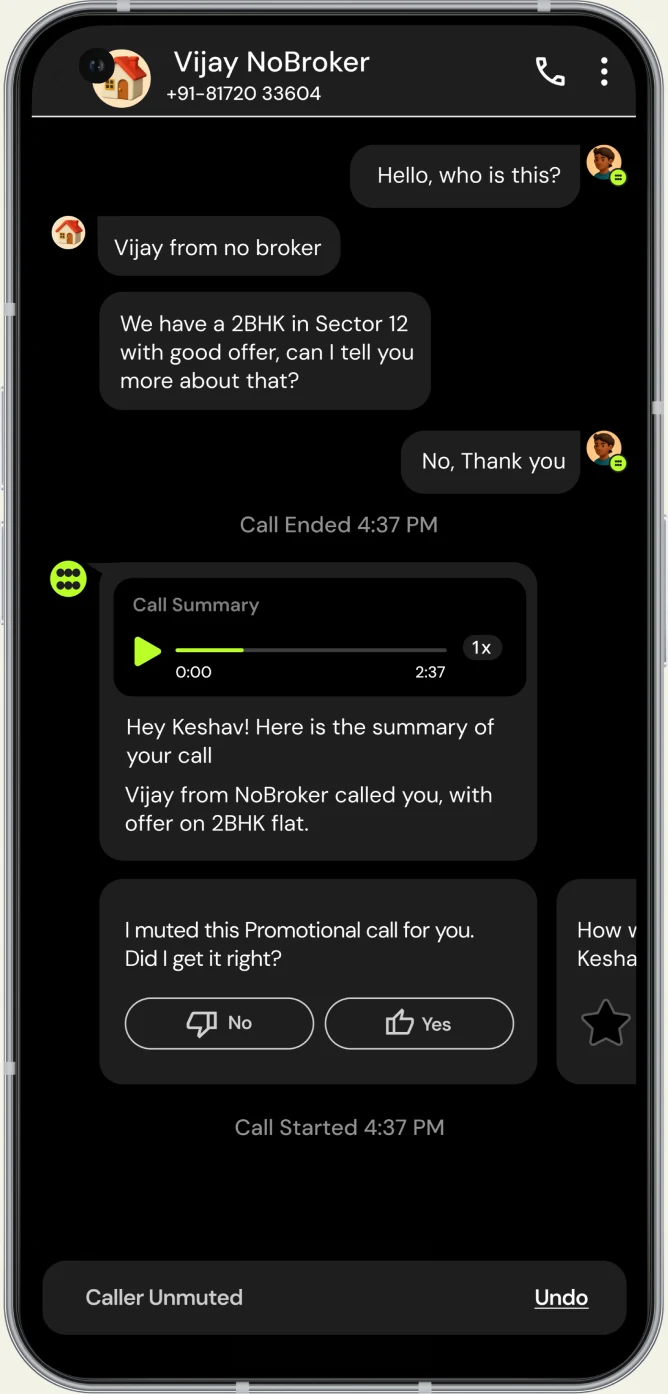
The call summary asks whether the AI understood the intent, then keeps reversal one tap away.
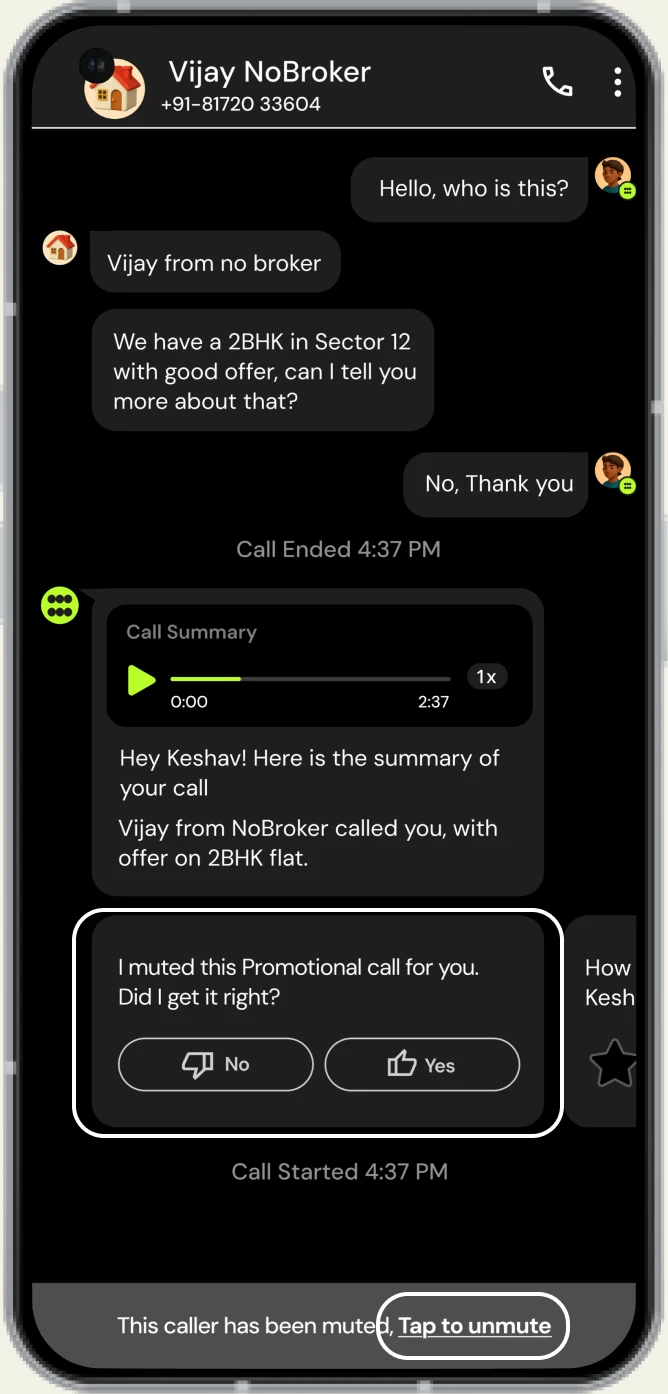
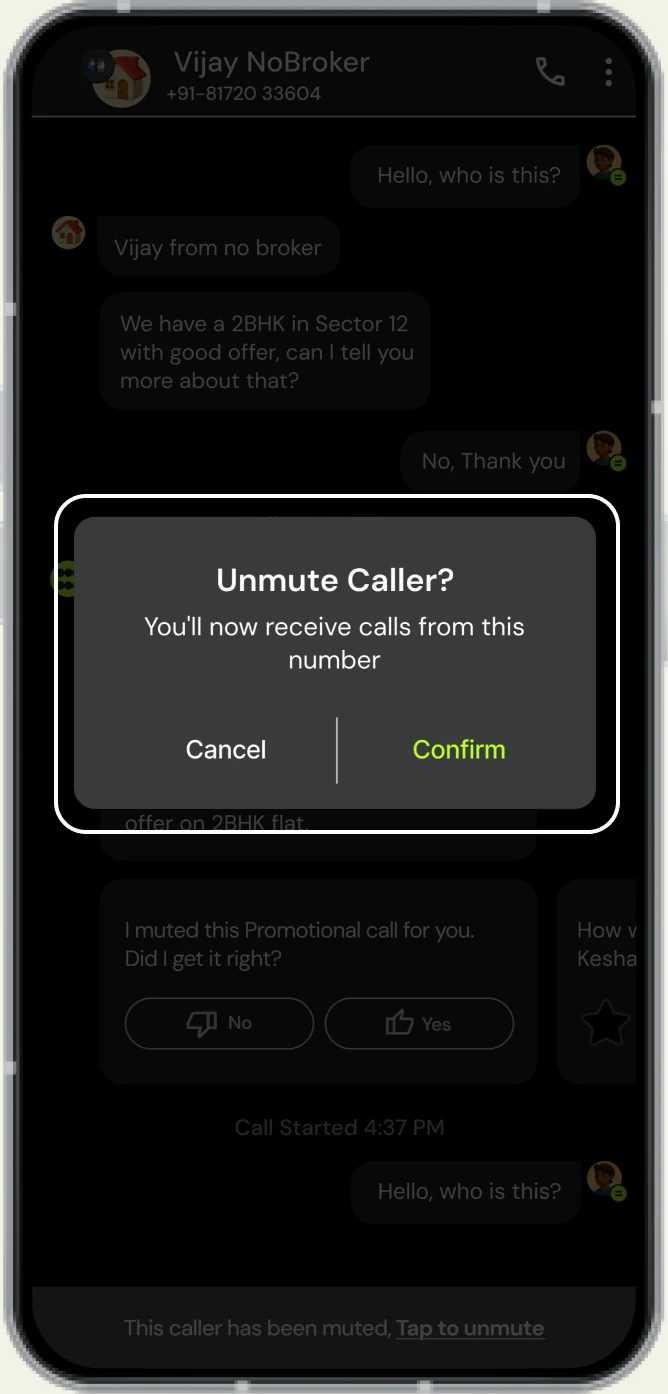
03 / Reversibility
Control stays trustworthy because it can be undone.
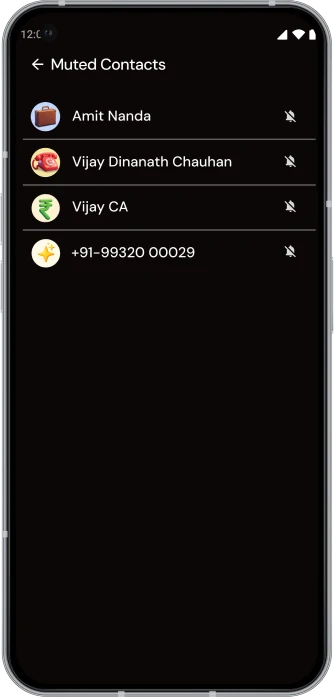
Muted callers remain manageable, and successful reversals are confirmed in the same conversation context.
The trust test
The happy path is only half the product.
AI mutes the wrong category
Receipts and reversal keep the user in control after automation acts.
A useful caller gets muted
Muted contacts are easy to review, restore, and understand.
The category feels too broad
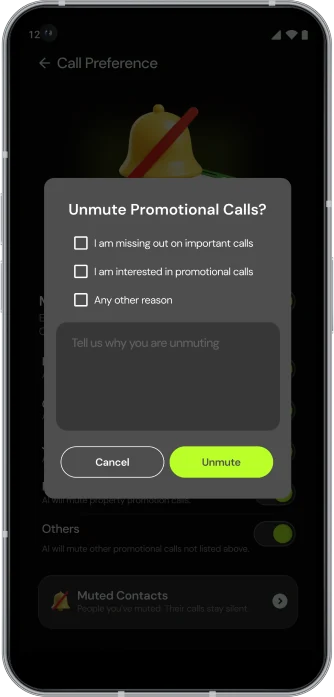
The system keeps intent visible first, then lets users refine the control.
The decisions
Three moves carried the story.
Surface intent before toggles
Categories such as credit card and loan were presented as recognizable call purposes rather than implementation labels.
Make silence reversible
Muted contacts and category-level states needed to feel manageable so users could trust a strong action.
Close the loop with proof
Confirmation, undo windows, and muted-call receipts made the system state visible after an AI decision.
What I would test next