
Online fashion forces users to imagine fit, proportion, mood, and full-outfit compatibility from a product grid.
Consumer AI / Commerce
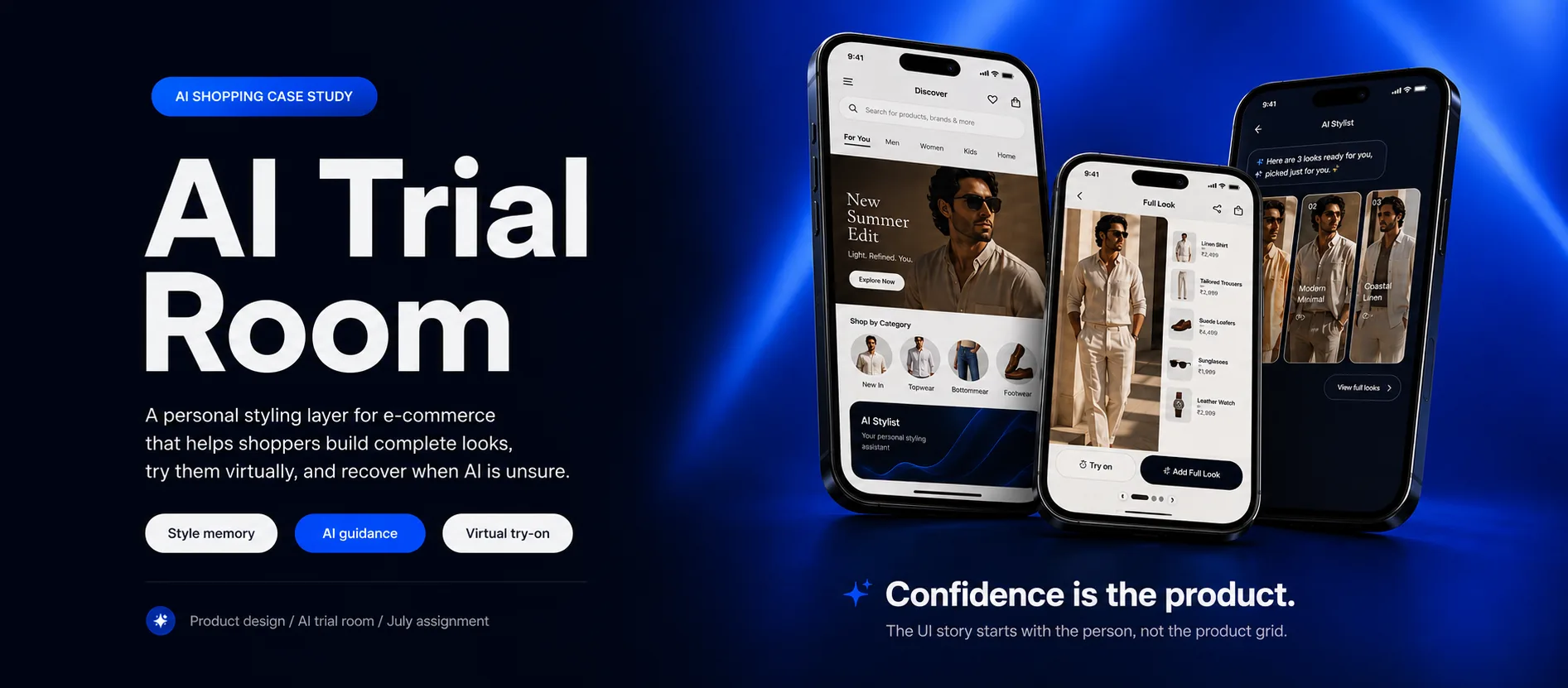
AI Trial Room
Turn fashion browsing into confidence, not homework.
- Product
- AI shopping and virtual try-on
- Role
- Product design lead
- Scope
- Concept, interaction model, AI states, shopping journey
The tension
Fashion grids show products. Shoppers still have to imagine the outfit, the fit, and whether any of it feels like them.
The real product was not virtual try-on. It was confidence: memory for what the user likes, context for why a look works, and honest recovery when the AI is unsure.
Success looked like
A stronger experience would make users feel advised, not automated: clear recommendations, visible style memory, and calm error recovery.
The constraint
AI output can be uncertain, body and face inputs are sensitive, and shopping decisions need confidence before checkout.
24%try-on intent lift
Projected lift from moving styling into the browse path.
18%full-look saves
Estimated gain from styling complete outfits, not loose items.
32kguided sessions
Concept target for shoppers asking AI before checkout.
The product story
The interface, one decision at a time.
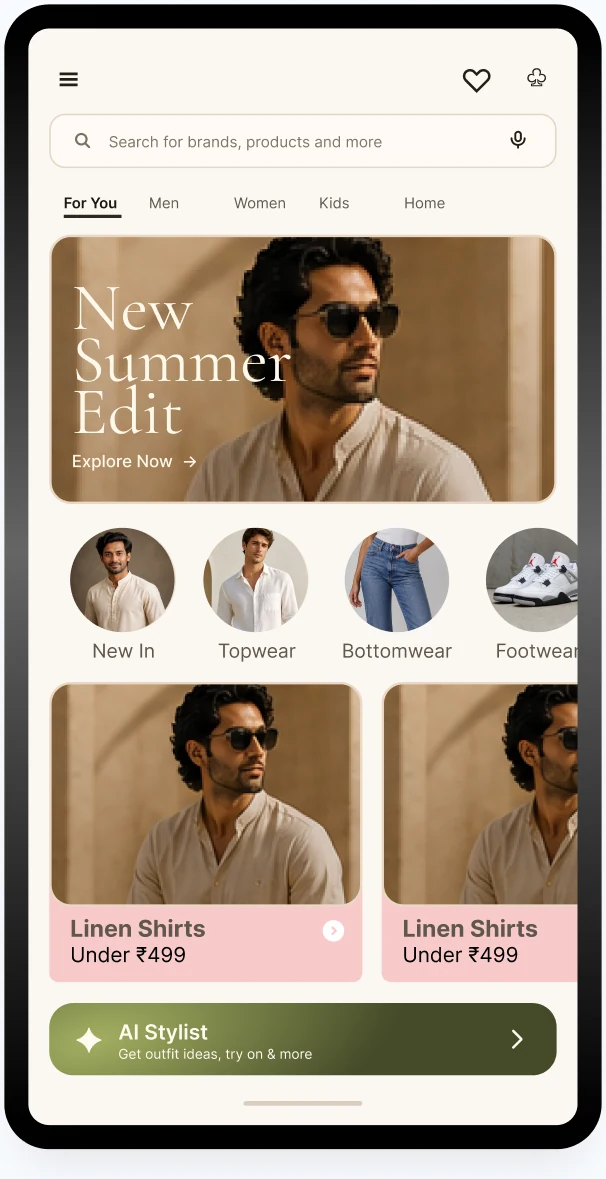
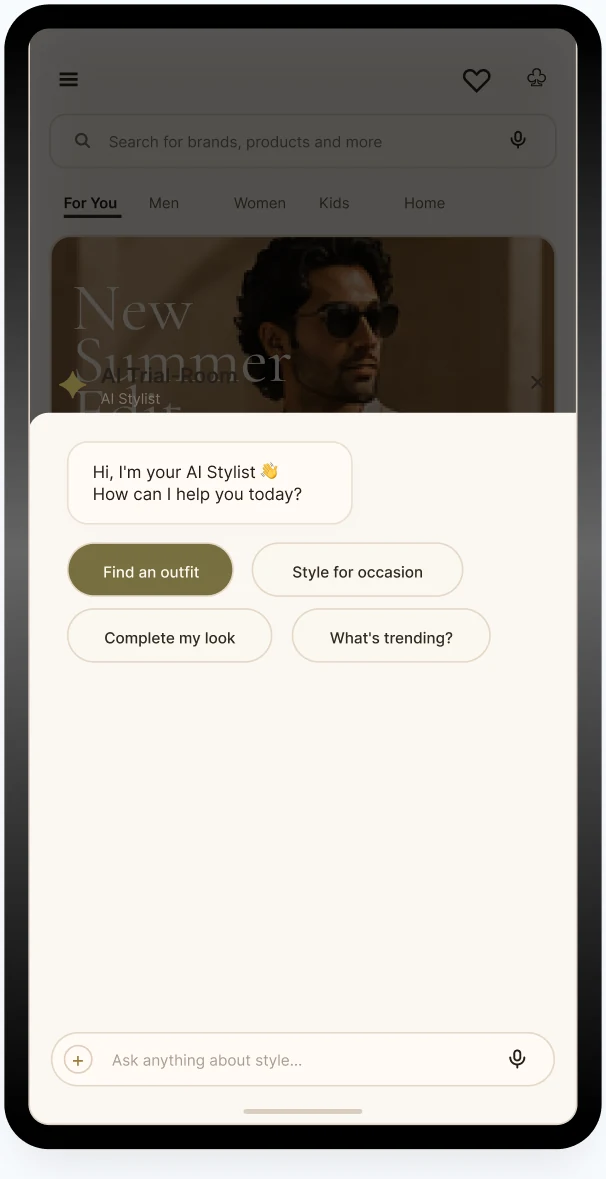
01 / Entry
Start inside the shopping habit.
The stylist enters from the product feed, so asking for help feels like the next shopping action, not a detour.
02 / The insight
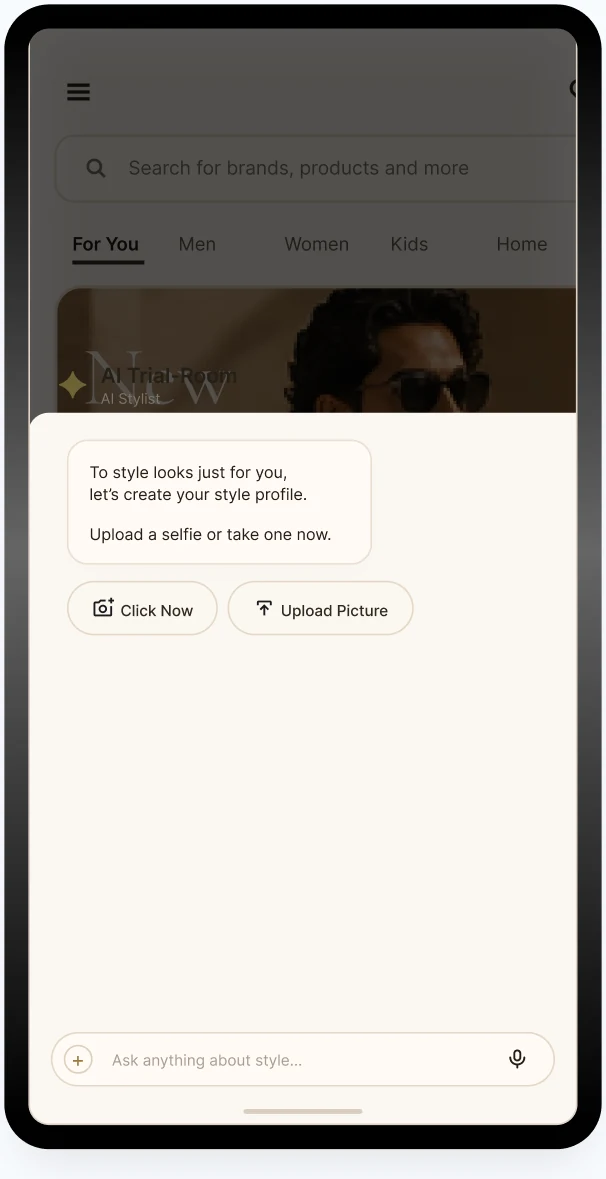
Remember style. Do not make users repeat it.
A lightweight profile captures durable signals once, then lets returning shoppers refine only what changed.
03 / The payoff
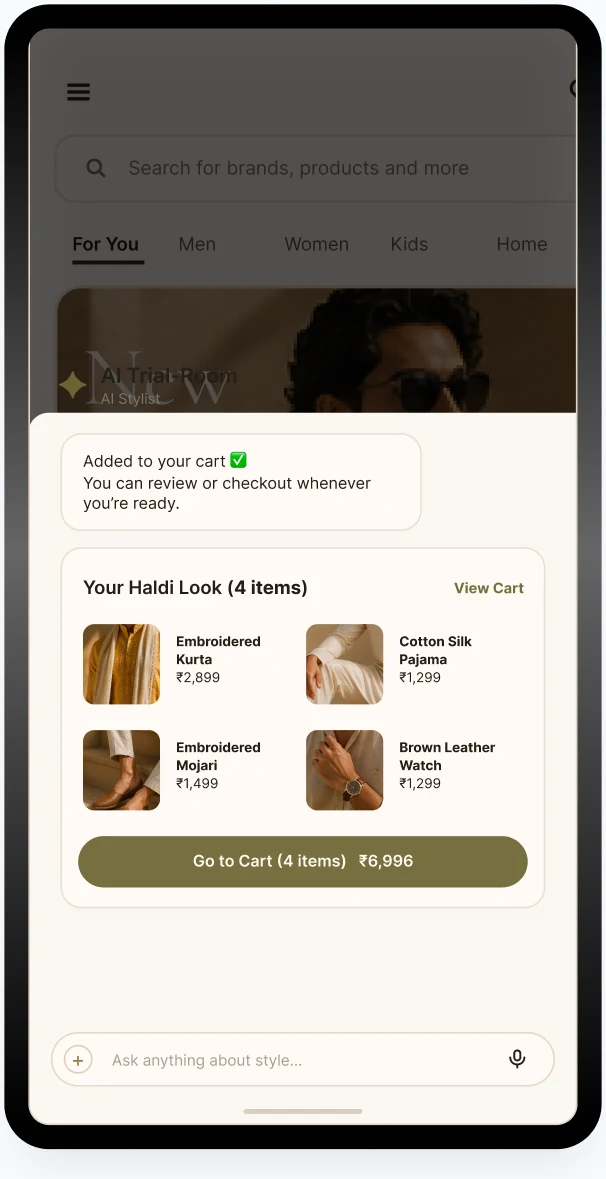
Advice should end in a complete decision.
The recommendation keeps the look, price, and next action together so inspiration can become a cart without rework.
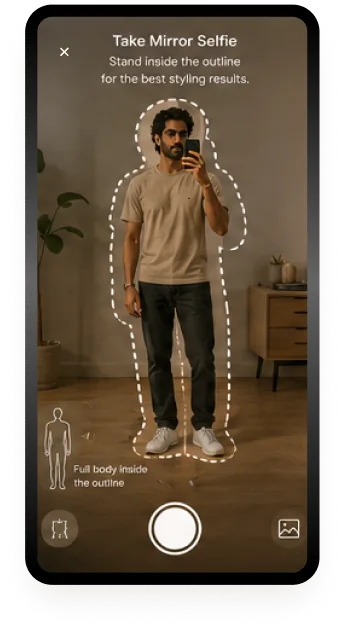
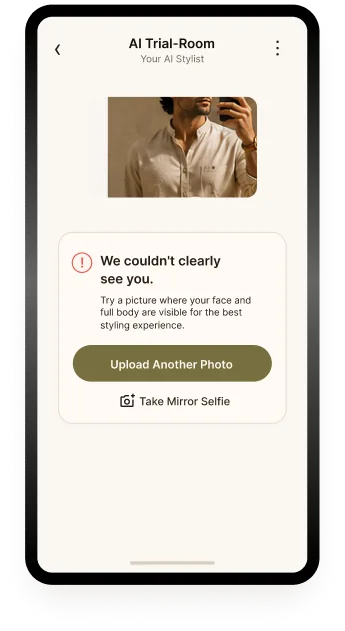
04 / Recovery / input
Bad input gets a better next move.
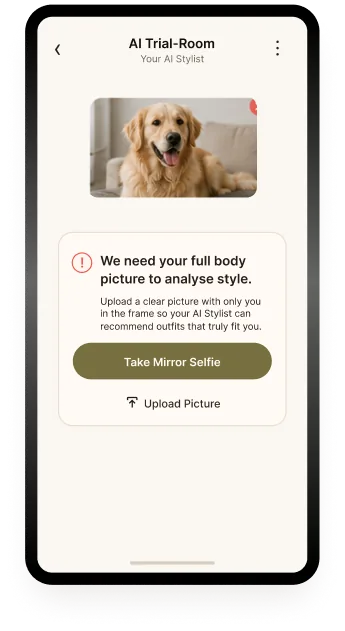
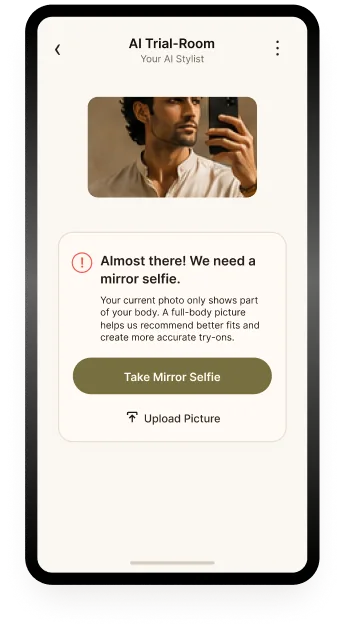
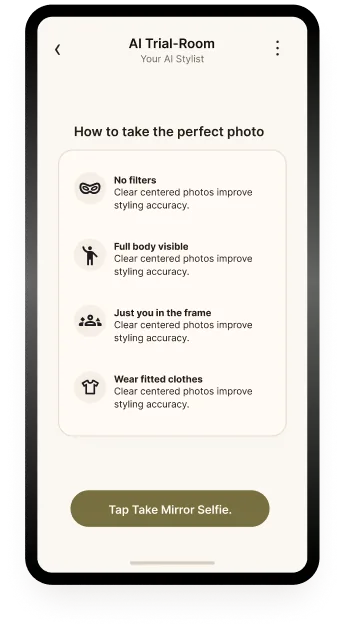
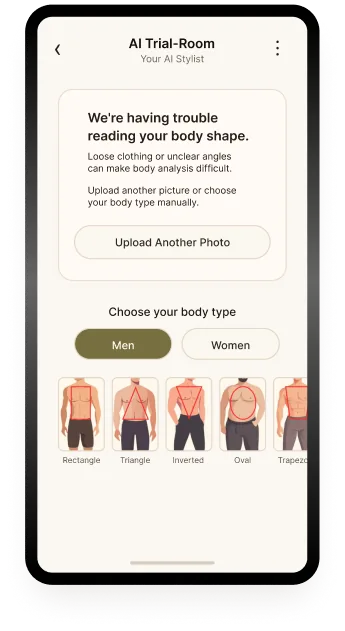
The product explains what the camera could not understand, then offers a retake, a guide, or a manual route.
05 / Recovery / confidence
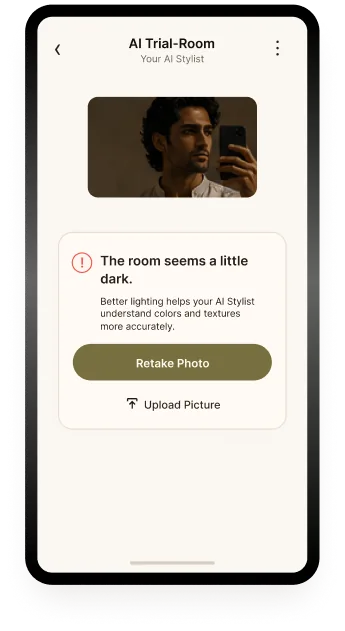
When confidence drops, the UI says why.
Uncertainty is surfaced as a fixable condition, not hidden behind a confident-looking output.
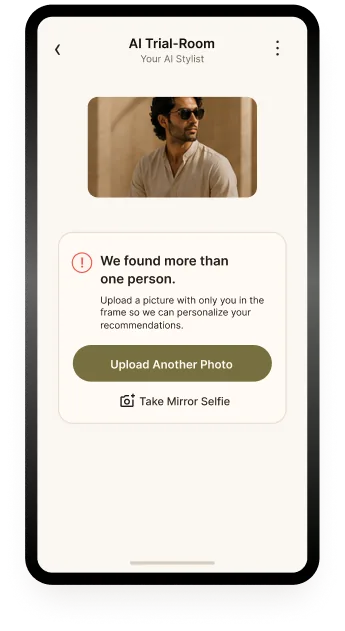
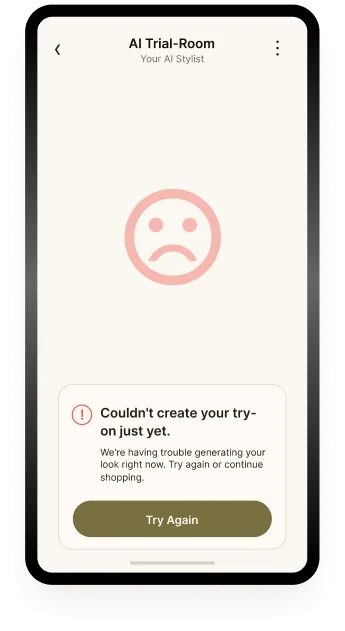
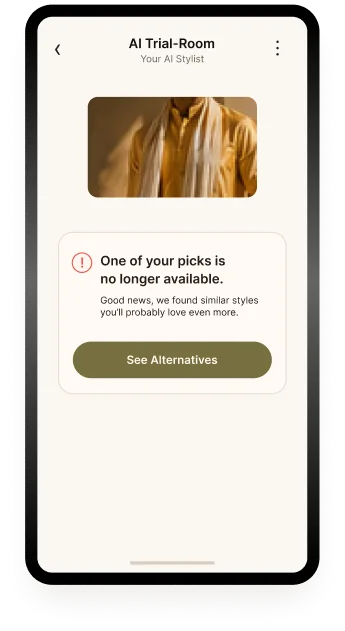
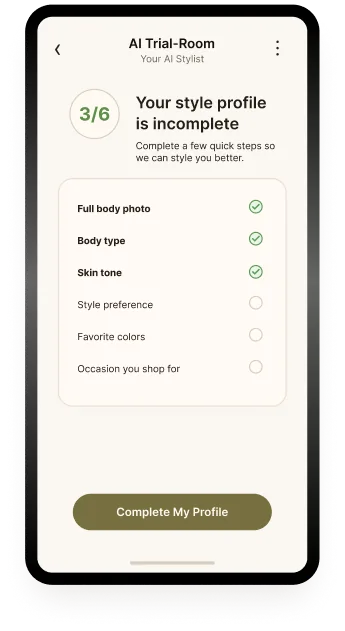
06 / Recovery / commerce
A failed AI moment should not end the shop.
Retry, alternatives, and profile completion keep momentum without pretending the original result worked.
The trust test
The happy path is only half the product.
Photo quality breaks the read
Blurry, dark, cropped, multi-person, or face-hidden inputs explain the issue and guide a better upload.
Try-on or stock fails
The UI offers retry, continue-shopping, or closest alternatives without pretending the match is perfect.
Profile signal is incomplete
The checklist shows what is missing and lets users complete the minimum needed for better styling.
The decisions
Three moves carried the story.
Treat confidence as the product job
The case frames virtual try-on as a trust problem, not a novelty feature. The UI explains recommendations and keeps recovery honest when AI is unsure.
Build a reusable style memory
Instead of remembering clicks, the system captures durable style signals that help future recommendations feel personal without forcing long setup.
Separate first-time and returning behavior
New users get a light onboarding path. Returning users can ask directly and tune occasion, budget, fit, or color mood one variable at a time.
What I would test next